

Weight Management
How Much Does Mounjaro® Cost in Canada?
Find out how much Mounjaro® costs in Canada, including insurance coverage, pharmacy fees and factors that can affect your out-of-pocket cost.
Published on Nov 2, 2026
·
6 min read
Check the spelling or try a different search. You can also browse our treatments or search drug prices.
Ozempic® and metformin are different prescription medications. Learn how they compare, including their active ingredients, medication classes, how they work, how they are taken and how cost may differ.
AI summaries may be inaccurate. Always confirm health information with a healthcare provider. Third-party AI tools are not operated by PocketPills.
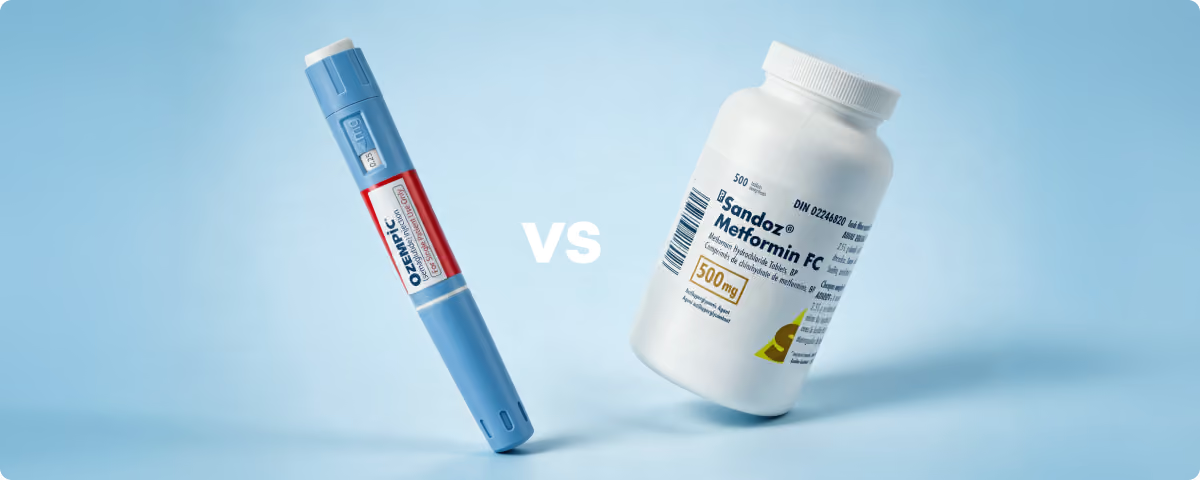
Ozempic® and metformin are both prescription medications, but they are quite different. They contain different active ingredients, belong to different medication classes and work through different biological pathways.
Ozempic® and metformin are both prescription medications, but they are quite different.
They contain different active ingredients, belong to different medication classes and work through different biological pathways.
So why are they compared?
Both medications can be part of a prescription treatment plan, and some people may encounter both when discussing their medication options with a practitioner. Understanding how they differ can help you ask better questions about your prescription and have a more informed conversation with your practitioner or pharmacist.
If you've searched for Ozempic® vs metformin, you may be wondering why these two medications are being compared in the first place.
They aren't the same medication, and they don't belong to the same drug class. Their mechanisms of action are also different.
However, both are prescription medications that may be considered as part of an individual's treatment plan. Depending on a person's circumstances, a practitioner may prescribe one medication, another medication, or more than one medication.
Here's how they compare.
The important takeaway is that Ozempic® and metformin are different medications with different mechanisms of action. They should not be treated as interchangeable.
Ozempic® is a prescription medication containing semaglutide, which belongs to a class of medications called GLP-1 receptor agonists. GLP-1 is a naturally occurring hormone involved in processes such as insulin release, glucagon regulation and digestion.
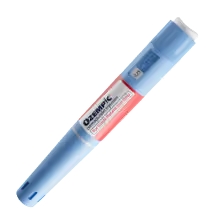
In Canada, Ozempic® is supplied as a prefilled injection pen for subcutaneous administration. The specific product, strength and directions for use are determined by the prescribing practitioner.
Metformin is a prescription medication that belongs to the biguanide class.
Unlike Ozempic®, metformin is taken orally.
It has been used in clinical practice for many years and is available in different formulations, including immediate-release and extended-release products.
The different formulations can have different administration instructions, so the directions on an individual's prescription should always be followed.
This is one of the biggest differences between the two medications.
Semaglutide works in a similar way to a hormone called GLP-1, which your body naturally produces. It affects processes that help regulate blood sugar, insulin and digestion.
Metformin works differently from semaglutide. It affects how the body uses insulin and how much glucose the liver produces.
In simple terms, metformin changes the way the body handles glucose and responds to insulin.
It means that although both medications influence the body's handling of glucose, they do so in different ways.
This is one reason a practitioner doesn't simply treat Ozempic® and metformin as interchangeable medications.
Another major difference is how the medications are administered.
Ozempic® is administered by subcutaneous injection.
The medication is supplied in a prefilled pen, and the specific administration schedule depends on the prescription.
Metformin is taken by mouth.
Depending on the formulation, metformin may be available as an immediate-release or extended-release tablet. The frequency and directions depend on the specific prescription.
The important point is that the two medications have completely different administration requirements.
If you are prescribed either medication, follow the instructions provided by your practitioner and pharmacist.
They can sometimes be prescribed as part of the same treatment plan.
Because Ozempic® and metformin work through different mechanisms, a practitioner may prescribe more than one medication when clinically appropriate.
Diabetes Canada's clinical guidance recognizes that more than one medication may be required depending on an individual's treatment needs.
Whether using both medications is appropriate depends on the individual's prescription, other medications and relevant health considerations.
If you're taking more than one prescription medication, your pharmacist can review your medication regimen with you and answer questions about how the medications fit together.
Do not start, stop or combine prescription medications on your own.
No.
Although both are prescription medications that can appear in similar treatment discussions, they contain different active ingredients and work differently.
Changing from one medication to another is not simply a matter of choosing a different brand or formulation.
A practitioner considers factors such as an individual's health history, current medications, kidney function, treatment goals and other relevant considerations when selecting an appropriate medication.
Prescription medications can have risks and adverse reactions, and those risks aren't identical between Ozempic® and metformin.
The safety profile of a medication depends on the specific product and the individual taking it.
Rather than trying to determine from a general online article whether a particular medication is safe for you, the appropriate approach is to review the product information and discuss your individual circumstances with your practitioner or pharmacist.
Your pharmacist can also explain what to watch for and what to do if you have concerns about your prescription.
For a detailed review of risks and precautions, refer to the Canadian product monograph or speak with your healthcare team.
The cost difference can be significant, but there isn't one universal price for either medication.
Your total prescription cost can depend on:
Metformin has been available as a generic medication for many years.
The Canadian market has also changed for semaglutide. Health Canada's Drug Product Database now lists marketed generic semaglutide products alongside Ozempic® products. If you're interested in current pricing, see our dedicated guide:
There isn't a universal answer.
Medication selection depends on the individual's circumstances rather than simply choosing the medication that appears more familiar, more affordable or more convenient.
A practitioner may consider factors such as:
Diabetes Canada's current clinical guidance emphasizes that medication selection should take clinical priorities and individual factors into account.
This is why an online comparison can help you understand your options, but it cannot tell you which prescription medication is appropriate for you.
If you're comparing Ozempic® and metformin, useful questions include:
Having these questions ready can make your appointment more productive and help you understand why a particular medication has been prescribed.
Once you have a prescription, managing your medication doesn't have to be complicated.
With Pocketpills, you can transfer an existing prescription to an online Canadian pharmacy and have your medications delivered to your home.
You can also access pharmacy support for questions about your prescriptions, including how to take your medication as directed.
Where available, Pocketpills also offers online assessments with licensed Canadian practitioners for people seeking prescription care.
Learn more about Pocketpills →
Speak with a licensed Canadian practitioner if you're considering starting, stopping or changing a prescription medication.
Your practitioner can review your individual circumstances and determine what treatment approach may be appropriate.
Your pharmacist can also help you understand your prescription, answer questions about administration and explain how your medications fit into your overall medication regimen.
No. Ozempic® contains semaglutide and belongs to the GLP-1 receptor agonist class. Metformin belongs to the biguanide class.
They are different medications, but both can appear in discussions about prescription treatment plans. Comparing them can help explain how their active ingredients, medication classes, mechanisms and administration methods differ.
The biggest differences are their active ingredients, medication classes and mechanisms of action. Ozempic® contains semaglutide and acts on GLP-1 receptors, while metformin is a biguanide that improves insulin sensitivity and reduces glucose production by the liver.
No. Ozempic® is administered by subcutaneous injection, while metformin is taken orally.
A practitioner may prescribe both as part of an individual's treatment plan when appropriate. Whether they should be used together depends on the individual's circumstances and other medications.
A medication change should be discussed with your practitioner. They can determine whether a different treatment approach is appropriate and provide instructions for making any change safely.
The cost of either medication can vary. Metformin has generic products available, while generic semaglutide products are now also marketed in Canada. Your actual cost depends on the product, pharmacy, quantity, fees and insurance coverage.
Health Canada now lists marketed generic semaglutide products separately from Ozempic®. It is more accurate to refer to these as generic semaglutide products rather than “generic Ozempic®.”
There isn't one universal Canadian price. The amount you pay can depend on the pharmacy, prescription quantity, dispensing fees and insurance coverage.
A licensed Canadian practitioner can review your health history, current medications and other relevant factors to determine what prescription treatment may be appropriate.

More reads from Weight Loss.
Join millions of Canadians who never wait in line.