

Weight Management
How Much Does Mounjaro® Cost in Canada?
Find out how much Mounjaro® costs in Canada, including insurance coverage, pharmacy fees and factors that can affect your out-of-pocket cost.
Published on Nov 2, 2026
·
6 min read
Check the spelling or try a different search. You can also browse our treatments or search drug prices.
AI summaries may be inaccurate. Always confirm health information with a healthcare provider. Third-party AI tools are not operated by PocketPills.
Prescription weight management options in Canada include oral medications and injectable treatments with different mechanisms of action, prescribing considerations and safety profiles. Which options may be appropriate depends on factors such as medical history, existing health conditions, other medications, individual goals and cost.
Prescription weight management options in Canada include oral medications and injectable treatments with different mechanisms of action, prescribing considerations and safety profiles. Which options may be appropriate depends on factors such as medical history, existing health conditions, other medications, individual goals and cost. A licensed healthcare practitioner can assess these factors and discuss available options as part of an individualized care plan.
Weight management in Canada has evolved beyond the traditional focus on dieting and going to the gym. While nutrition and physical activity remain important parts of overall health, medical care now offers additional options for people navigating weight management, including prescription medications that can be considered as part of an individualized care plan.
These options come in different forms, from oral medications to injections, each with its own mechanism of action, prescribing criteria and safety considerations. Understanding the differences can help you make sense of the available options and the role medical care may play in weight management.
This guide explores prescription weight management options available in Canada, how they differ, what healthcare practitioners consider when assessing suitability, and what to know about costs and accessing care online.
Prescription weight management options in Canada include medications taken by mouth and injectable treatments. They belong to different medication categories and act through different biological pathways.
According to the 2025 update to the Canadian Adult Obesity Clinical Practice Guideline, six medications are authorized for long-term weight management in Canada. These include options that act on incretin-related pathways, appetite-related pathways, fat absorption and specific biological pathways associated with rare genetic conditions.
The following table outlines the main categories and examples of active ingredients.
Note: Setmelanotide is intended for specific rare genetic conditions, not general weight management. Specific indications and eligibility criteria vary by medication.
The main difference between weight loss pills and injections is how the medication is administered and the biological pathway it targets. The route of administration alone does not determine whether a medication is appropriate for an individual.
Oral prescription options include medications with different mechanisms of action. For example, naltrexone/bupropion is a combination medication that acts on pathways associated with appetite and reward, while orlistat acts in the digestive system by inhibiting certain enzymes involved in dietary fat digestion.
Oral medications can have different administration instructions, precautions and interactions. Some must be taken with particular meals or according to a specific schedule.
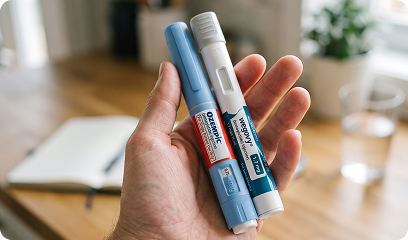
Injectable options include medications that act on GLP-1 receptors and medications that act on both GIP and GLP-1 receptors. Another injectable option, setmelanotide, acts on a different pathway and is reserved for specific rare genetic conditions.
Depending on the product, injections may be administered daily or weekly. The required schedule, administration technique, storage instructions and monitoring requirements vary.
There is no single prescription pill that can be described as the strongest option for everyone. The answer depends on what is being measured, the medication's mechanism, the evidence for its authorized use and the individual's medical circumstances.
When comparing prescription options, healthcare practitioners consider several factors:
These considerations are more meaningful than ranking medications based on online anecdotes or isolated study results.
A medication's suitability also cannot be determined from a product name alone. Formulation, prescribed dose, individual health circumstances and the evidence supporting the particular use all matter.
If you're researching the strongest prescription pill, a healthcare practitioner can explain the differences between available oral options and whether any are appropriate for your needs.
There is no universally best weight loss pill in Canada. The most appropriate option depends on the person's medical history, treatment goals, other medications, potential risks, preferences and budget.
A practitioner may assess whether an oral medication is appropriate by reviewing existing health conditions, relevant measurements, current medications and previous treatment experiences. Depending on the circumstances, they may also discuss injectable options or approaches that do not involve medication.
It is worth looking beyond online rankings. A medication discussed frequently on social media may not be suitable for everyone, and a product's popularity does not establish its suitability for an individual.
When comparing options, ask about the medication's authorized use, administration instructions, potential adverse effects, contraindications, interactions and ongoing costs. You should also understand what monitoring may be needed and when your treatment plan should be reviewed.
The decision should be made with a licensed healthcare practitioner who can consider the full picture rather than selecting a medication based on a ranking or headline.
Eligibility depends on the medication's authorized criteria and an individual's clinical circumstances. A practitioner considers more than body weight alone when determining whether prescription treatment may be appropriate.
For adults, Canadian clinical guidance generally discusses pharmacotherapy for people with a BMI of 30 or higher, or a BMI of 27 or higher alongside adiposity-related complications. These are clinical guideline thresholds, not a guarantee of eligibility for every medication. Individual product monographs and clinical circumstances still apply.
An assessment may include:
Weight management is complex, and BMI alone does not capture every aspect of a person's health. The 2025 Canadian guideline emphasizes individualized assessment and shared decision-making.
A prescription should follow a clinical assessment, not a self-diagnosis based on an online calculator or a list of eligibility criteria.
The cost of prescription weight management medication in Canada varies by product, pharmacy, formulation, dispensing fees and insurance coverage. There is no single price that applies to every medication or every person.
When researching weight loss drugs in Canada, consider the total cost rather than just the advertised price.
Medication price: Different active ingredients and formulations can have different prices. Confirm the price for the specific prescribed product.
Dispensing fees: Ask whether the quoted amount includes pharmacy dispensing fees and any other applicable charges.
Insurance coverage: Coverage depends on the insurer, plan rules, the medication and any applicable eligibility criteria. A medication's authorization by Health Canada does not automatically mean it is covered by every insurance plan.
Ongoing affordability: Consider the cost over the anticipated treatment period, including follow-up appointments and any required monitoring.
Access and availability: A product's regulatory status does not guarantee that it is currently available at every pharmacy.
Before making a decision, ask a licensed Canadian pharmacy for current pricing and confirm coverage with your insurer. If cost is a concern, discuss it with your practitioner so affordability can be considered alongside clinical suitability.
Online prescription services may provide access to a healthcare assessment without requiring an in-person appointment. However, an online consultation does not guarantee that a prescription will be issued.
A legitimate service should involve a clinical assessment by an appropriately licensed healthcare practitioner. Depending on your circumstances, the practitioner may review your medical history, current medications, health measurements and other relevant information before deciding whether a prescription is appropriate.
Before using an online service, check the following:
Be cautious of websites that promise a prescription without meaningful assessment, advertise guaranteed outcomes or offer prescription medications without requiring the appropriate authorization.
An online service should make access to appropriate care more convenient, not bypass clinical judgment or prescription requirements.
Before starting a prescription medication, make sure you understand the instructions, precautions and follow-up requirements associated with that specific product.
Ask your practitioner or pharmacist about the following:
Some medications require gradual dose adjustments, while others have specific food-related instructions or storage requirements. These details vary by product, so general information about one medication should not be applied to another.
Weight management care may also involve nutrition support, physical activity, behavioural strategies and attention to other health factors. Medication decisions should fit within an individualized plan rather than replace broader clinical care.
Do not start, stop, combine or change prescription medications based on online recommendations without speaking with your healthcare practitioner.
Consider speaking with a healthcare practitioner if you want to understand your prescription weight management options, have questions about medication safety or need help comparing different formulations and costs.
An assessment is especially important if you have existing health conditions, take other medications, have experienced adverse effects with a previous treatment or are considering purchasing prescription medication online.
A practitioner can review your circumstances, explain relevant prescribing criteria, discuss potential risks and determine what next steps may be appropriate. A pharmacist can also clarify administration instructions, storage requirements and possible medication interactions.
If you experience a severe or unexpected reaction after taking a medication, seek prompt medical advice. For symptoms that suggest a medical emergency, contact emergency services.
Canadian prescription options include oral medications such as naltrexone/bupropion and orlistat, injectable medications such as liraglutide, semaglutide and tirzepatide, and setmelanotide for specific rare genetic conditions. Authorization, availability and prescribing criteria vary by product. A healthcare practitioner can explain which options may be appropriate.
There is no single prescription pill that is strongest for everyone. Medications have different mechanisms, evidence, contraindications and safety considerations. Comparing them requires more than looking at online rankings. A healthcare practitioner can explain the available oral options and assess their suitability based on your medical history and individual needs.
The best option depends on the person's health circumstances, other medications, preferences, potential risks and budget. A medication that is suitable for one person may not be appropriate for another. A clinical assessment can help determine whether an oral medication or another approach may be suitable.
Yes, certain prescription injectable medications are authorized in Canada for weight management. These include products containing liraglutide, semaglutide and tirzepatide, as well as setmelanotide for specific rare genetic conditions. Each product has its own authorized uses and prescribing requirements. A prescription and appropriate clinical assessment are required.
An online healthcare service may offer an assessment with a licensed practitioner. Whether a prescription is issued depends on the clinical assessment and the applicable prescribing requirements. Before using an online service, verify practitioner credentials, pharmacy licensing, transparent pricing and access to appropriate follow-up care.

More reads from Weight Loss.
Join millions of Canadians who never wait in line.