

Weight Management
How Much Does Mounjaro® Cost in Canada?
Find out how much Mounjaro® costs in Canada, including insurance coverage, pharmacy fees and factors that can affect your out-of-pocket cost.
Published on Nov 2, 2026
·
6 min read
Check the spelling or try a different search. You can also browse our treatments or search drug prices.
AI summaries may be inaccurate. Always confirm health information with a healthcare provider. Third-party AI tools are not operated by PocketPills.
GLP-1 (glucagon-like peptide-1) is a hormone naturally produced by your body after you eat. It plays a role in blood glucose regulation, digestion and appetite signalling.
GLP-1 (glucagon-like peptide-1) is a hormone naturally produced by your body after you eat. It plays a role in blood glucose regulation, digestion and appetite signalling.
You may also have heard of GLP-1 medications, which are prescription medications designed to activate the same biological pathway.
This blog explains what GLP-1 is, what it does in the body, how GLP-1 medications work, the different types available in Canada and how to access them.
You may have heard the term GLP-1 in the news, on social media or while researching prescription treatment options.
Despite the growing attention, GLP-1 isn't a new substance. It's a hormone your body naturally produces after eating.
Understanding what GLP-1 does in the body can make it easier to understand how medications that act on this pathway work.
GLP-1 stands for glucagon-like peptide-1, a hormone naturally produced by the body after eating.
Specialized cells in the lining of the intestines release GLP-1 in response to food. Smaller amounts are also produced in certain areas of the brain.
GLP-1 belongs to a group of hormones called incretins. These hormones help coordinate the body's response to a meal, including processes involved in blood glucose regulation, digestion and appetite signalling.
GLP-1 levels rise after eating, but the hormone doesn't remain active for very long. An enzyme called DPP-4 breaks down naturally occurring GLP-1 within minutes.
This short duration of activity became an important consideration in the development of medications that act on the GLP-1 pathway.
GLP-1 is part of a signalling system that helps the body respond to food. Its activity influences several processes:
Together, these processes form part of the body's normal response to eating.
A GLP-1 receptor agonist is a medication designed to activate the same receptors targeted by naturally occurring GLP-1.
You may hear these medications referred to as:
The term “agonist” simply means a substance that activates a receptor.
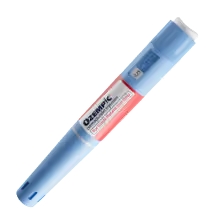
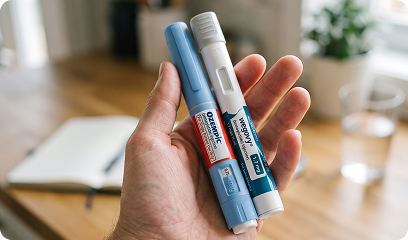
Unlike naturally occurring GLP-1, which is broken down quickly, these medications are designed to remain active in the body for much longer. Depending on the medication and formulation, they may be taken daily or weekly, and some are administered by injection while others are available as oral medications.
“GLP-1” is often used as a general term, but medications that act on this pathway are not all the same.
These medications activate the GLP-1 receptor. Examples include semaglutide, dulaglutide, liraglutide and exenatide.
They can differ in their molecular structure, formulation, administration and approved uses.
Some medications act on two hormone receptors: GIP and GLP-1.
Tirzepatide is an example. GIP, or glucose-dependent insulinotropic polypeptide, is another hormone involved in the body's response to food.
Because these medications act on two receptor pathways, they are more accurately described as dual GIP/GLP-1 receptor agonists rather than simply GLP-1 medications.
Researchers are also studying medications designed to activate GLP-1, GIP and glucagon receptors. These are investigational treatments and are not currently authorized for use in Canada.
Different medications that act on the GLP-1 pathway have different Health Canada-approved uses.
Depending on the specific medication, they may be authorized for uses related to type 2 diabetes or weight management in eligible individuals. Not every medication in this broader group is authorized for the same purposes.
Whether a particular medication is appropriate depends on factors such as:
A licensed Canadian practitioner can assess these factors and determine whether a prescription treatment may be appropriate.
GLP-1 medications are prescription-only medications in Canada.
To obtain one, you'll need an assessment from a licensed Canadian practitioner. During an assessment, the practitioner may review:
If a prescription is appropriate, it can be dispensed by a licensed Canadian pharmacy.
As interest in GLP-1 medications has grown, so has the number of products marketed as “natural GLP-1” alternatives. These may include supplements, powders, drops, patches and herbal products.
These products are not the same as prescription GLP-1 receptor agonists and should not be assumed to activate GLP-1 receptors in the same way.
Health Canada has also warned consumers about unauthorized GLP-1 products sold through online and other unregulated channels.
If a product claims to provide prescription-like GLP-1 effects without requiring a prescription, approach those claims cautiously. For prescription medications, use a licensed Canadian pharmacy and speak with a practitioner or pharmacist if you have questions.
If you're considering a GLP-1 medication or have questions about blood glucose, weight management or prescription treatment options, a practitioner can help you understand what options may be appropriate.
This is particularly important if you have existing health conditions, take prescription medications or are considering starting, stopping or changing a medication.
A pharmacist can also answer questions about your prescription, potential interactions and how your medication should be taken.
GLP-1, or glucagon-like peptide-1, is a hormone naturally produced by the body after eating. It is involved in processes including blood glucose regulation, digestion and appetite signalling.
GLP-1 is a hormone. GLP-1 receptor agonists are medications designed to activate the same receptors as naturally occurring GLP-1.
GLP-1 receptor agonists activate receptors involved in processes such as insulin and glucagon regulation, blood glucose control, gastric emptying and appetite signalling.
Certain GLP-1 receptor agonists are authorized in Canada for the management of type 2 diabetes. The appropriate treatment depends on the specific medication and the individual's health needs.
Certain medications that act on the GLP-1 pathway are authorized in Canada for weight management in eligible individuals. A practitioner can determine whether a particular treatment is appropriate.
There isn't one option that is appropriate for everyone. Different medications have different active ingredients, formulations, approved uses and product instructions. A practitioner can help determine whether a particular treatment is appropriate based on your health needs.
No. GLP-1 medications are prescription-only medications in Canada.
Yes. Although many medications that act on the GLP-1 pathway are administered by injection, oral options are also available in Canada.
No. Products marketed as “natural GLP-1” alternatives are not the same as prescription GLP-1 receptor agonists and should not be assumed to activate GLP-1 receptors in the same way.

More reads from Weight Loss.
Join millions of Canadians who never wait in line.