


Online Pharmacy
How to Get a Prescription Refilled in Canada
Learn how prescription refills work in Canada, when to request one, what happens when a prescription expires, and how to manage refills online.
Published on Oct 19, 2026

Vérifiez l'orthographe ou essayez une autre recherche. Vous pouvez également parcourir nos traitements ou rechercher le prix des médicaments.
AI summaries may be inaccurate. Always confirm health information with a healthcare provider. Third-party AI tools are not operated by PocketPills.
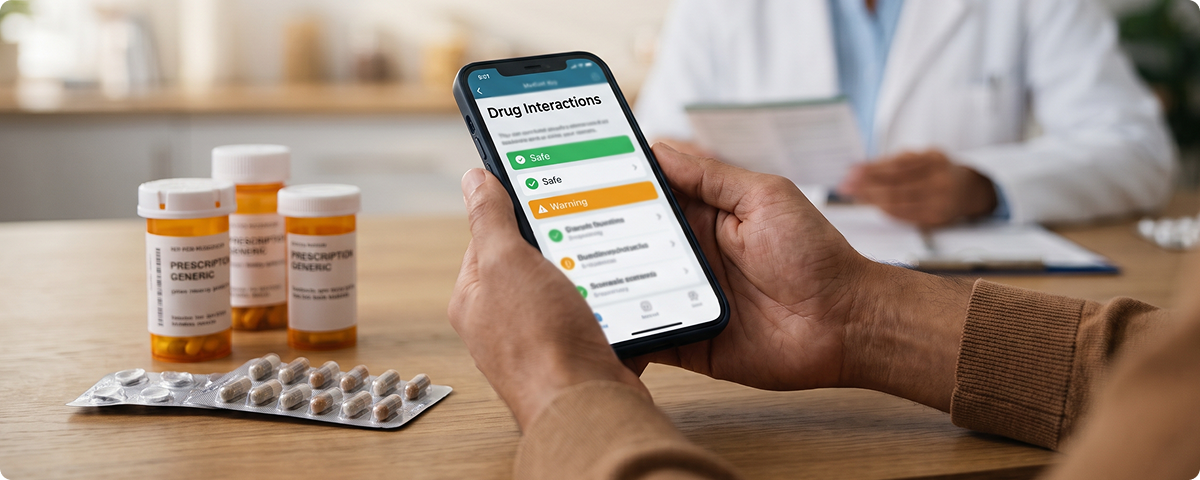
A drug interaction occurs when a medication interacts with another substance, potentially changing how it works or increasing the risk of side effects. A drug interaction checker can help identify potential interactions between prescription medications, over-the-counter products, vitamins and supplements.
A drug interaction occurs when a medication interacts with another substance, potentially changing how it works or increasing the risk of side effects. A drug interaction checker can help identify potential interactions between prescription medications, over-the-counter products, vitamins and supplements.
However, online tools may not account for your complete medical history or every individual risk. For a more personalized review, speak with a pharmacist or another qualified healthcare practitioner before making changes to your medications.
A drug interaction happens when a medication's effects are changed by another medication, food, drink, supplement or substance. Depending on the interaction, a medication may become less effective, cause stronger side effects or increase the risk of harm.
Not every interaction is dangerous. Some combinations can be used safely with appropriate guidance, while others may require a change in dosage, timing or treatment.
Understanding potential interactions is especially important if you take several medications, manage a long-term health condition or regularly use over-the-counter products and supplements.
A drug interaction checker is a tool that helps identify possible interactions between medications and other substances.
Depending on the tool, you may be able to enter prescription medications, OTC medicines, vitamins and herbal supplements to see whether any known interactions have been documented.
A medication interaction checker may flag concerns such as:
The results can help you identify questions to discuss with a pharmacist or practitioner. They do not automatically determine whether a combination is safe for you personally.
Drug interactions generally fall into three categories.
A drug-drug interaction occurs when two or more medications affect each other.
For example, combining certain medicines that cause drowsiness can increase sedation and impair coordination. Some medication combinations can also increase the risk of bleeding or affect blood pressure.
The level of risk depends on the specific medications, their doses, how they are taken and your individual circumstances.
Certain foods and drinks can affect how a medication is absorbed, processed or eliminated by the body.
For example, grapefruit and grapefruit juice can interact with certain medications. Alcohol can also increase side effects or create additional risks with some drugs.
These interactions are medication-specific. You do not necessarily need to avoid grapefruit, alcohol or particular foods with every medication. Check the instructions for your specific medication and ask a pharmacist if you are unsure.
Vitamins, minerals, herbal products and other supplements can interact with prescription and OTC medications.
For example, St. John's wort can affect how the body processes several medications and may reduce their effectiveness. Some supplements can also increase side effects or affect bleeding risk.
Natural products are not automatically safe to combine with medications. Include all supplements in your medication list when checking for interactions.
If you want to check whether your medications interact, follow these steps.
Start by listing everything you take, including:
Include the medication's name, strength and dosage when available. If you are unsure about an ingredient, check the packaging or ask a pharmacist.
This step matters because different products can contain the same active ingredient. You may unintentionally take more than intended if you use multiple products with overlapping ingredients.
Choose a medication interaction checker from a reliable medical or pharmacy resource.
Enter each medication and supplement as accurately as possible. Check the names and strengths carefully, especially if a product has both a brand name and a generic name.
Review any warnings or explanations provided. Pay attention to the substances involved, the potential effect and any instructions about seeking professional advice.
If the tool does not recognize a medication, cannot identify a supplement or provides unclear results, do not assume the combination is safe.
Read the official patient information or product monograph for each medication, particularly the sections about interactions, precautions and side effects.
These details can help you understand which foods, drinks, medications or supplements may need to be avoided or monitored.
However, medication information may not address every combination you take. A pharmacist can help interpret the information in the context of your complete medication list.
If a checker identifies a possible interaction, or you are unsure about the results, speak with a pharmacist before making changes.
A pharmacist can assess the specific medications and doses involved, consider your other health conditions and explain whether the combination requires monitoring or another approach.
Even if an online checker does not flag an interaction, professional advice may still be appropriate if you take several medications or have concerns about side effects.
Depending on the interaction, your pharmacist or practitioner may recommend monitoring for certain symptoms, adjusting the timing of doses, changing medication or exploring an alternative.
Do not stop a prescription medication, change your dose or start a new supplement solely because of an online checker result. Some medications can cause harm if stopped suddenly, and changes should be made with appropriate clinical guidance.
For the most useful results, gather the following information before using a checker or speaking with a pharmacist.
You may not need to enter every detail into an online tool, but having this information available can make a medication review more useful.
Online drug interaction checkers can be useful for identifying known or documented interactions, but their results have limitations.
Use a checker as an initial screening tool, not as confirmation that all your medications are safe to take together.
Consider speaking with a pharmacist when:
It is also worth requesting a medication review periodically, particularly when your prescriptions change or different practitioners are involved in your care.
If you experience signs of a severe allergic reaction, such as difficulty breathing or swelling of the throat, seek emergency medical care. If you think you may have taken a dangerous combination or an overdose, contact your local poison information service or emergency services for immediate guidance.
Keeping track of medications can become complicated, especially when you have multiple prescriptions, take OTC products or manage medication needs for family members.
Pocketpills offers digital healthcare and prescription management services designed to help make medication management more convenient. Depending on your needs, you can explore prescription management options and access available support from healthcare practitioners and pharmacists.
For questions about a potential interaction, speak with a pharmacist who can review your medications and provide guidance specific to your situation.
The best option is a reputable tool that uses reliable, regularly maintained medication information and clearly explains potential interactions. Online checkers are useful starting points, but a pharmacist can help interpret results based on your medications and health history.
Some reputable medication information resources offer free access to interaction information. Check the tool's source, coverage and limitations, and speak with a pharmacist if you need personalized guidance.
Some checkers include vitamins, minerals and herbal supplements, but coverage varies. Always tell your pharmacist about every supplement you take, even if it does not appear in an online tool.
Not without appropriate medical guidance, unless you have been given specific instructions for that situation. A warning does not always mean the combination is unsafe, and abruptly stopping certain medications can be harmful. Contact a pharmacist or practitioner to determine what to do.
Yes. Different practitioners may not have a complete view of every medication you take. Keep an up-to-date medication list and share it with each practitioner and pharmacist involved in your care.
Check when a medication is added, stopped or changed, or when you begin taking a new OTC product or supplement. A pharmacist can also advise whether a more comprehensive medication review would be helpful.
More reads from Weight Loss.
Rejoignez des millions de Canadiens qui ne font plus jamais la queue.