


Online Pharmacy
How to Get a Prescription Refilled in Canada
Learn how prescription refills work in Canada, when to request one, what happens when a prescription expires, and how to manage refills online.
Published on Oct 19, 2026

Vérifiez l'orthographe ou essayez une autre recherche. Vous pouvez également parcourir nos traitements ou rechercher le prix des médicaments.
AI summaries may be inaccurate. Always confirm health information with a healthcare provider. Third-party AI tools are not operated by PocketPills.
Electronic prescriptions allow authorized healthcare practitioners to send prescription information to a pharmacy digitally. In Canada, electronic prescribing can reduce reliance on paper prescriptions, support communication between practitioners and pharmacists, and simplify medication management. However, prescriptions must still meet applicable requirements before a pharmacy can dispense medication.
An electronic prescription, also called an e-prescription, is a prescription created or transmitted digitally by an authorized prescriber to a pharmacy.
Instead of carrying a handwritten prescription to a pharmacy, a patient may have their prescription information sent electronically. The pharmacy then reviews the prescription and processes it according to applicable requirements.
Electronic prescribing can help reduce issues associated with illegible handwriting, manual data entry and lost paper prescriptions. It can also make it easier for practitioners and pharmacists to communicate about a patient's medication.
Not all digital prescriptions use the same technology. A prescription transmitted through an electronic prescribing system is different from an electronic fax or a photograph of a paper prescription. The method used can affect how the pharmacy receives and processes the information.
The process depends on the practitioner, pharmacy and systems being used, but it generally follows four steps.
You begin by consulting an authorized healthcare practitioner, such as a physician or nurse practitioner, or another professional with prescribing authority for the medication and circumstances involved.
During the consultation, the practitioner reviews your health concerns and determines whether medication is appropriate. Depending on your needs, the consultation may take place in person or virtually.
A prescription is issued only when clinically appropriate and permitted under the practitioner's scope of practice.
If a prescription is appropriate, the practitioner creates it with the necessary medication details and instructions.
When electronic prescribing is available, the prescription information can be transmitted digitally to the pharmacy. This helps move prescription information between healthcare professionals without requiring the patient to carry a paper copy.
The exact process depends on the systems used by the practitioner and pharmacy, as well as the requirements for the medication.
After receiving the prescription, the pharmacy reviews it before dispensing the medication.
The pharmacist may verify the prescription's validity, confirm the medication and dosage, check for potential interactions, and contact the prescriber if any information needs clarification.
Electronic transmission does not remove the need for these professional checks. The pharmacy must still follow applicable laws and dispensing requirements.
Once the prescription has been reviewed and processed, you can obtain your medication through the pharmacy's available options.
Depending on the pharmacy, this may mean collecting the medication in person or arranging delivery. Availability, eligibility and delivery times depend on the pharmacy and medication.
Remember that sending a prescription electronically does not automatically mean your medication is ready. The pharmacy must first receive and process it.
The terms are related, but they describe different parts of the process.
An electronic prescription refers to prescription information created or transmitted digitally.
An online prescription often refers to a prescription obtained through a virtual healthcare service. This may involve an online consultation with a practitioner who determines whether medication is appropriate.
For example, you might consult a practitioner online, receive a prescription if appropriate, and have it sent to a pharmacy electronically. In this case, the consultation takes place online and the prescription is transmitted digitally.
However, an online appointment does not guarantee that a prescription will be issued. A practitioner must assess your needs and determine the appropriate next steps.
Similarly, receiving a digital copy of a prescription does not necessarily mean it can be used in place of an original prescription or sent to any pharmacy. Requirements depend on the transmission method, medication and applicable rules.
Electronic prescribing can make prescription management more convenient while supporting communication between healthcare professionals.
Less reliance on paper. Digital transmission can reduce the need to carry a paper prescription between a practitioner's office and a pharmacy.
Fewer transcription issues. Structured prescription information can reduce errors associated with interpreting handwriting or manually entering details, although electronic systems can still have errors.
Improved communication. Digital systems can help practitioners and pharmacists exchange prescription information and resolve questions.
More convenient medication management. Depending on the service, digital workflows can make it easier to coordinate new prescriptions, renewals and ongoing medication needs.
Support for medication safety. Electronic prescribing can help reduce certain risks associated with lost or illegible prescriptions. It does not replace a pharmacist's professional judgment or other medication safety checks.
Yes. A prescription may be issued following a virtual consultation when the practitioner determines that medication is appropriate and the applicable rules allow it.
Depending on the service and your needs, a virtual consultation may involve reviewing your medical history, discussing symptoms, assessing current medications and determining whether further evaluation is necessary.
If a prescription is issued, the practitioner may be able to send it to your chosen pharmacy through an available transmission method.
Some health concerns require an in-person examination, testing or follow-up. Certain medications may also have additional prescribing or monitoring requirements. Virtual care is not suitable for every health concern.
Yes, you may be able to arrange prescription medication online through a legitimate service that works with a licensed dispensing pharmacy.
The process generally involves obtaining a valid prescription, ensuring the dispensing pharmacy receives and verifies it, and arranging payment and collection or delivery.
Before using an online service, check that the dispensing pharmacy is properly licensed in the relevant province or territory. Be cautious of websites that offer prescription medications without an appropriate prescription or make unrealistic claims about their products.
You should also understand how your personal health information is handled, how to contact the pharmacy, and what to do if you have questions about your medication.
For more information, read Health Canada's guidance on buying drugs over the internet.
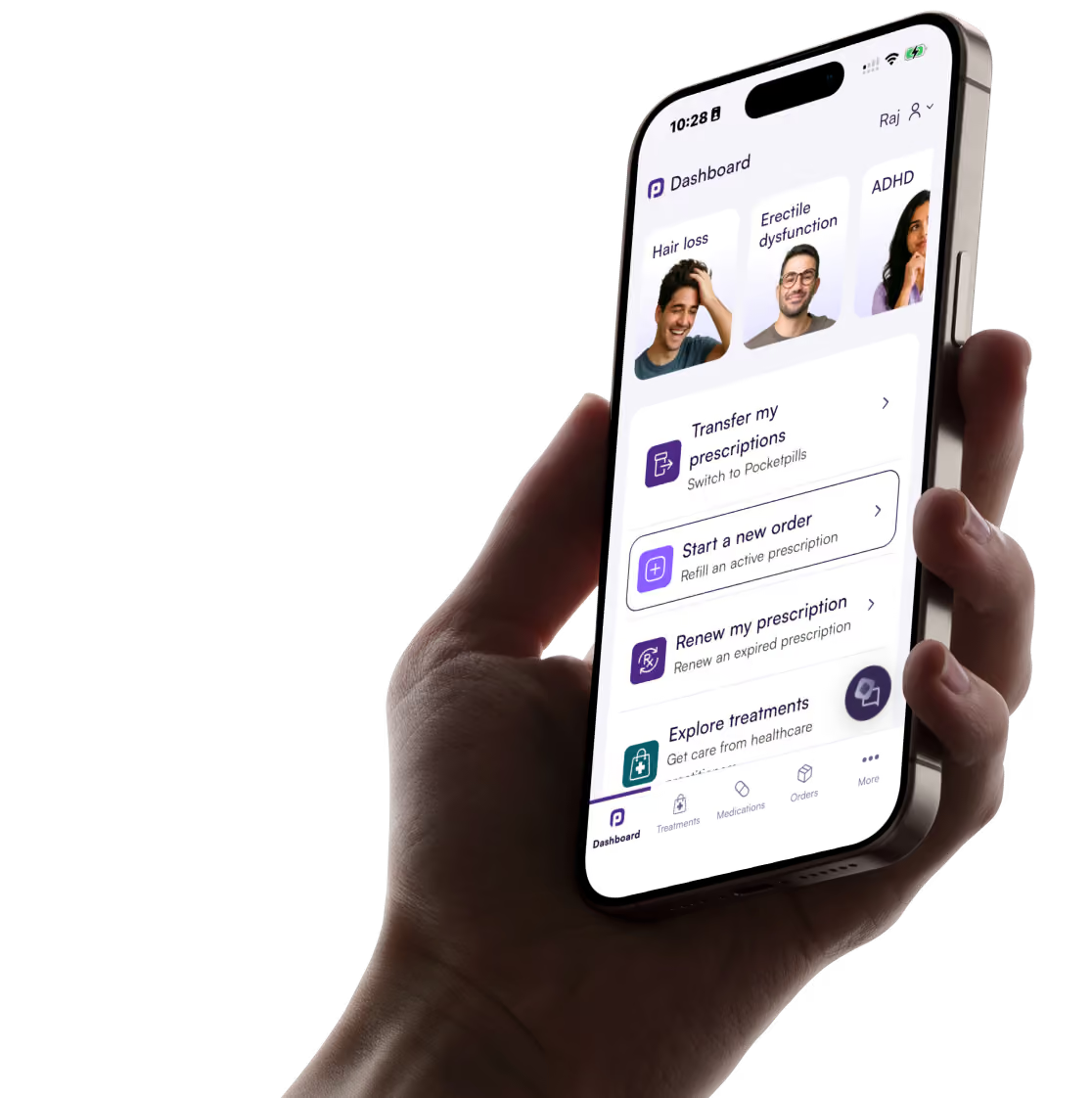
Pocketpills helps people manage medication needs through a digital platform that connects them with healthcare services and prescription management support.
Depending on your needs, you can explore options for:
The steps depend on your prescription, the service you need and the medication involved. A practitioner must determine whether a prescription is appropriate, and the dispensing pharmacy must meet the applicable requirements before providing medication.
Electronic prescriptions can be used in Canada when they meet applicable federal, provincial or territorial requirements. Rules may vary depending on the medication, prescribing professional and method of transmission.
Yes, you can ask your practitioner whether they can send your prescription directly to your preferred pharmacy. The available options depend on the systems they use and the requirements for your medication.
Yes. Pharmacies can receive prescriptions through permitted electronic transmission methods. The pharmacy must still verify and process the prescription according to applicable requirements.
Not necessarily. Additional rules or restrictions may apply to certain medications, including some controlled substances. Ask your practitioner or pharmacist how your specific prescription can be transmitted and dispensed.
No. The pharmacy must receive and process the prescription. The pharmacist may need to clarify information or complete additional checks before the medication can be dispensed.
In some circumstances, a prescription can be transferred, but eligibility depends on the medication, prescription and applicable rules. Contact the dispensing pharmacy to find out what options are available.
More reads from Weight Loss.
Rejoignez des millions de Canadiens qui ne font plus jamais la queue.