Summary
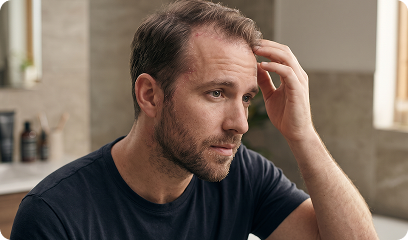
Telogen effluvium is a common form of temporary hair shedding that can develop after physical stress, illness, childbirth, nutritional deficiencies, or other changes in the body. It often causes noticeable thinning across the scalp rather than distinct bald patches. Understanding its triggers, symptoms, and recovery timeline can help you determine when to seek professional advice and what steps may support healthy hair regrowth.
Introduction
Finding more hair than usual on your pillow, in the shower, or in your hairbrush can be unsettling, especially when the shedding seems to happen all at once.
One possible explanation is telogen effluvium, a condition in which more hair follicles than usual enter the resting phase of the hair growth cycle and eventually shed. It can develop after a stressful event or physical change, sometimes weeks or months after the original trigger.
The good news is that telogen effluvium is often temporary. However, understanding what caused the shedding is important because recovery depends partly on whether the underlying trigger has resolved.
What is telogen effluvium?
Telogen effluvium is a form of nonscarring hair loss that causes excessive shedding across the scalp. Rather than creating clearly defined bald spots, it typically makes hair look thinner overall.
Hair grows in a cycle that includes an active growth phase, a transition phase, and a resting phase. During telogen effluvium, a larger-than-usual number of hair follicles shift into the resting phase. The affected hairs then shed, sometimes making hair loss noticeably more pronounced.
Shedding may become apparent up to three months after the event that triggers it. This delay can make it difficult to connect the hair loss to its original cause.
A 2025 Canadian clinical review, A Canadian Algorithm on the Management of Telogen Effluvium, also describes the condition as a potentially reversible response to different physical and emotional stressors.
Telogen effluvium can affect people of different ages and sexes. Although it often resolves over time, persistent shedding may require further investigation.
What causes telogen effluvium?
Telogen effluvium can develop when something disrupts the normal hair growth cycle. The trigger varies from person to person, and more than one factor may contribute.
1. Physical or emotional stress
Significant stress can affect the body's normal hair growth cycle. Physical stressors may include surgery, a serious illness, a high fever, or another major health event. Emotional stress may also contribute.
Hair shedding does not necessarily begin immediately. You may notice a change in hair density several months after the stressful event, when the original cause is no longer at the forefront of your mind.
2. Pregnancy and childbirth
Hormonal changes during pregnancy and after delivery can influence hair growth and shedding.
Some people experience increased shedding in the months after childbirth as their hair growth cycle adjusts following pregnancy. This is commonly temporary, although the amount of shedding and the time needed for recovery can vary.
Not every instance of postpartum hair loss is telogen effluvium, so persistent, severe, or unusual shedding should be assessed rather than automatically attributed to hormonal changes.
3. Nutritional deficiencies
Hair growth requires adequate nutrition. Low iron stores, insufficient protein intake, and certain other nutritional deficiencies may contribute to excessive shedding.
Restrictive diets, rapid weight changes, or difficulty meeting nutritional needs may increase the likelihood of a deficiency. However, nutritional deficiencies are not responsible for every case of telogen effluvium.
A healthcare practitioner may recommend blood tests based on your symptoms, diet, medical history, and other findings. Supplements are best considered when there is a clear reason to use them, rather than as a general solution for all hair loss.
4. Illness, surgery, or recovery from a health event
An infection, high fever, major surgery, or significant physical illness can place stress on the body and disrupt the hair growth cycle.
The resulting shedding may occur after the initial illness has improved. This delayed response can make it seem as though hair loss has appeared without an obvious explanation.
If shedding continues after recovery, a practitioner can help determine whether the original illness remains relevant or whether another factor may be contributing.
5. Thyroid or other medical conditions
Certain medical conditions, including thyroid disorders, can affect hair growth. Persistent shedding may sometimes be associated with an underlying health issue that has not yet been identified.
The Canadian clinical review on telogen effluvium discusses investigating possible triggers, including metabolic abnormalities and nutritional deficiencies, when the cause is unclear.
This is one reason it is important not to assume that all diffuse hair shedding is temporary or stress-related.
6. Medications and changes in treatment
Some medications may contribute to hair shedding in certain people. The timing of the shedding, the medication involved, and other health factors can help determine whether there may be a connection.
If you notice increased hair loss after starting a medication or changing your treatment, speak with your prescribing practitioner or pharmacist. Do not stop or adjust a prescribed medication on your own.
What are the symptoms of telogen effluvium?
The most noticeable symptom is increased hair shedding. However, the pattern and timing of the shedding can provide additional clues.
Common signs include:
- More hair than usual falling out: You may notice increased shedding when washing, brushing, or styling your hair.
- Thinning across the scalp: Your hair may look less dense overall rather than developing one clearly defined bald patch.
- A wider-looking part: The scalp may become more visible as hair density decreases.
- A thinner ponytail: If you tie your hair back, you may notice that it feels less full than before.
- Delayed onset: Shedding may begin weeks or months after an illness, stressful event, childbirth, or another trigger.
Telogen effluvium generally does not destroy the hair follicles, which is why regrowth is often possible once the trigger has resolved.
However, these symptoms are not exclusive to telogen effluvium. Other types of hair loss can look similar, so a professional assessment may be needed to confirm the cause.
How long does telogen effluvium last?
Recovery depends on the trigger, how long it lasts, and whether another condition is contributing to the shedding.
Acute telogen effluvium
Acute telogen effluvium is generally short-term. Shedding often becomes noticeable a few months after the trigger and may settle within approximately six months.
Once the trigger has resolved, the hair growth cycle can gradually return to its usual pattern. Visible regrowth takes additional time, so your hair may not regain its previous fullness immediately.
Chronic telogen effluvium
Chronic telogen effluvium refers to shedding that continues for more than six months.
Persistent shedding does not necessarily mean the hair loss is permanent. However, it makes identifying the underlying cause particularly important. Ongoing nutritional deficiencies, thyroid problems, repeated stressors, or another type of hair loss may need to be considered.
If you have been experiencing excessive shedding for several months without improvement, seek professional advice rather than relying on the assumption that it will resolve on its own.
When will hair start growing back?
Regrowth is gradual. Even after shedding begins to settle, it can take several months for new hair to become noticeable and longer for overall density to improve.
Hair grows relatively slowly, so changes may be difficult to see from week to week. Consistent photographs taken under similar lighting can help you track progress over time.
Recovery varies, and regrowth cannot be guaranteed until the underlying cause and the condition of the hair follicles are better understood.
How is telogen effluvium diagnosed?
There is no single symptom that confirms telogen effluvium. A healthcare practitioner will generally consider your shedding pattern, medical history, recent life events, and scalp appearance.
An assessment may include the following:
Medical and hair history: You may be asked when the shedding began, whether it followed an illness or major event, whether you have changed medications, and whether hair loss runs in your family.
Scalp examination: The practitioner may examine your scalp to assess the pattern of thinning and look for signs that suggest another condition.
Blood tests, when appropriate: Depending on your history and symptoms, testing may help investigate possible iron deficiency, thyroid abnormalities, or other underlying issues.
A correct diagnosis matters because telogen effluvium can resemble other types of hair loss. Treating the wrong cause may delay appropriate care.
What are the treatment options for telogen effluvium?
Treatment focuses on understanding the cause of the shedding and addressing factors that can be corrected. There is no single approach that is appropriate for every person.
1. Identify and address the trigger
When a contributing factor can be identified, managing it is an important part of care.
Depending on the circumstances, this may involve addressing a nutritional deficiency, evaluating a thyroid concern, reviewing a medication with a practitioner, or supporting recovery after an illness.
If the trigger was temporary and has already been resolved, additional treatment may not be necessary. Shedding can settle as the hair growth cycle recovers.
2. Review nutritional needs
If a nutritional deficiency is suspected, a practitioner may recommend testing and advise on appropriate ways to correct it.
Taking supplements without knowing whether you need them may not help and can sometimes cause harm. The right approach depends on your individual nutritional needs and any underlying health conditions.
3. Support healthy hair care
Gentle hair care can help minimize breakage while your hair recovers. Consider reducing excessive heat, harsh chemical treatments, and hairstyles that repeatedly pull tightly on your scalp.
These steps do not directly correct every cause of telogen effluvium, but they may reduce additional hair damage and make fragile hair easier to manage.
4. Discuss additional treatment options when appropriate
Some people may benefit from additional treatment, depending on the cause of their shedding, how long it has lasted, and whether another type of hair loss is present.
A practitioner can explain which options may be appropriate, the evidence supporting them, and any potential risks. Treatments intended for other forms of hair loss should not automatically be assumed to work for telogen effluvium.
The Canadian expert review on telogen effluvium emphasizes proper assessment, identifying triggers, and individualizing management rather than using the same approach for everyone.
Can you prevent telogen effluvium?
Not every case can be prevented. Illness, surgery, childbirth, and other physical changes may trigger shedding even when you take good care of your hair.
However, a few practical habits may help reduce avoidable contributors:
- Eat a balanced diet: Aim to meet your nutritional needs, including adequate protein and essential nutrients.
- Avoid restrictive dieting: Significant calorie restriction or rapid weight changes may contribute to nutritional stress.
- Manage ongoing stress where possible: Rest, supportive relationships, and appropriate stress-management strategies may help overall well-being, although they cannot guarantee prevention.
- Use gentle hair-care practices: Minimize repeated tension, excessive heat, and treatments that cause breakage.
- Seek advice about persistent symptoms: Early assessment may help identify a treatable underlying issue.
Be cautious about products marketed as quick fixes for hair shedding. Their suitability and evidence vary, and they may not address the actual cause of your hair loss.
When should you seek professional advice?
Consider speaking with a healthcare practitioner if you experience:
- Sudden, severe, or persistent shedding.
- Clearly defined bald patches.
- Scalp pain, redness, scaling, or significant itching.
- Hair loss involving your eyebrows or eyelashes as well as your scalp.
- Other unexplained symptoms alongside hair loss.
- Shedding that continues beyond six months or keeps recurring.
These signs may indicate another condition or an underlying issue that requires assessment. Seek advice sooner if the hair loss is severe or accompanied by concerning symptoms.
Exploring hair loss care through Pocketpills
If you're concerned about hair shedding, understanding the possible cause is an important first step.
Pocketpills offers an online hair loss treatment service for eligible Canadians. You can explore the hair loss treatment service and its assessment process to learn about the next steps available to you.
A licensed Canadian practitioner can review the information you provide and determine whether further assessment or treatment may be appropriate. If a prescription is clinically appropriate and you meet the service's eligibility requirements, it may be prescribed and dispensed through Pocketpills’ pharmacy.
Because telogen effluvium can have several causes, an assessment is important before assuming that a particular treatment is suitable.
Frequently asked questions
Is telogen effluvium permanent?
Telogen effluvium is often temporary because it does not typically destroy hair follicles. However, recovery depends on the trigger and whether another condition is contributing. Persistent shedding should be assessed rather than assumed to be harmless or temporary.
Can telogen effluvium cause bald patches?
Telogen effluvium generally causes diffuse shedding across the scalp rather than distinct bald patches. Clearly defined patches may suggest another type of hair loss and should be evaluated by a healthcare practitioner.
Can stress cause telogen effluvium?
Yes. Significant physical or emotional stress can disrupt the hair growth cycle. Shedding may not become apparent until weeks or months after the stressful event, which can make the connection difficult to recognize.
Does telogen effluvium get worse before it gets better?
Shedding can continue for a period after the original trigger because the hair growth cycle takes time to adjust. However, worsening or prolonged hair loss should not automatically be attributed to normal recovery. A practitioner can help determine whether another factor is involved.
Should I take supplements for telogen effluvium?
Supplements may be appropriate when a nutritional deficiency has been identified, but they are not necessary for everyone. Taking excessive amounts of certain nutrients can be harmful. Speak with a healthcare practitioner before starting supplements specifically for hair loss.
Can telogen effluvium happen after pregnancy?
Yes. Changes associated with pregnancy and childbirth can affect the hair growth cycle, and increased shedding may occur in the months after delivery. If shedding is severe, persistent, or accompanied by other symptoms, seek professional advice.
Can telogen effluvium return?
It can recur if another triggering event occurs or an underlying contributor persists. Repeated episodes may warrant assessment to identify possible causes and rule out other conditions.
The bottom line
Telogen effluvium is a common cause of diffuse hair shedding that often develops after a physical or emotional stressor. Although the delay between the trigger and the shedding can be frustrating, many cases improve once the underlying issue has resolved.
Recovery takes time, and persistent hair loss deserves attention. Identifying the cause, addressing any treatable contributors, and getting appropriate professional advice can help you understand what to expect and which next steps may be suitable.
Sources